
Key Concepts
Projects succeed or fail based on how well you engage the people around them. Stakeholder engagement runs the whole project lifecycle: identifying who should be involved, analyzing their interests and influence, and executing a plan that keeps them on side. The stakeholder engagement assessment matrix tracks progress by comparing current and desired engagement levels.


Projects are delivered by people, for people. No matter how well we plan the work, manage the schedule, or control the budget, projects succeed or fail based on how well we engage the people around them. Stakeholders can open doors, create momentum, and champion our outcomes, or they can raise objections, withdraw support, and block progress. Understanding who they are, what they need, and how to work with them is one of the most important skills a project manager can develop.
Stakeholder engagement is not a one-time activity at project kickoff. It runs through the entire project lifecycle, from identifying who should be involved, to analyzing their interests and influence, to executing a plan that keeps them informed, included, and aligned. This section walks through that engagement lifecycle. We will cover aligning and managing stakeholder expectations in tasks 1.5 and 1.6.
Who Are Stakeholders?
Stakeholders are anyone affected by our project or anyone who can affect it. They can be individuals or groups. The PMI definition of a stakeholder is: “Any individual, group, or organization that may affect, be affected by, or perceive itself to be affected by a decision, activity, or outcome of a project, program, or portfolio.”
Stakeholders include:
- Sponsors and executives who envision and commission new products and services, or fund changes to existing ones
- Team members who help analyze the work, define what is required, then build and deliver the project outcomes
- Business representatives who explain what is required and provide feedback on work products
- Customers and users of the new or modified products and services who will ultimately use them
- Vendors and suppliers who help deliver portions or significant components of the solution
- Other stakeholders such as advisors, reviewers, subject matter experts, and third-party contributors
The “perceived to be affected” part of the definition also includes competitors, regulatory bodies, protest groups, and even external parties who believe the project impacts them. Anyone or any group that is, or believes themselves to be, impacted is a stakeholder.
While these groups act as their own communities, projects bring them together as a single ecosystem. We need to understand this ecosystem: their attitudes, requirements, influence and authority. Then we create a plan to engage with them effectively.
1.4.1 Identify Stakeholders

The first step is simply knowing who is out there. Missing a key stakeholder early in the project can cause significant problems later; their concerns or requirements may surface at exactly the wrong moment. A thorough identification effort at the start saves considerable pain downstream.
Activities to identify stakeholders include:
The usual suspects: Review each of the common stakeholder group categories and list who is impacted by or can influence this project. Sponsors, customers, team roles, and vendors are obvious starting points.
Ask the team: Take the same questions to the team and ask them to individually, then collectively, brainstorm who the project stakeholders are. Team members often know of groups or individuals that a project manager might miss.
Surveys and questionnaires: Ask other stakeholders to tell us who we may have missed. We can canvas relevant stakeholders for their opinions on additional stakeholders or stakeholder groups we should consider.
Document analysis: Review existing project documentation such as the project charter. Anyone or group identified there will be a stakeholder. Also review risks, assumptions, and constraints, as these often point to people or groups we should be considering. Refer to documentation from similar previous projects: their stakeholder registers, lessons learned, communication plans, risk and issue logs can all surface stakeholders relevant to the current effort.
Two additional sources are worth checking early. The business case names the people and groups who have a stake in the investment being authorized, and often identifies key decision-makers and affected business units who might not appear in operational project documents. The benefits management plan, where one exists, identifies who will realize the benefits the project creates. Those beneficiaries are stakeholders whether or not they appear in the project team structure.
As the project progresses, the issue log, change log, and requirements documents are also worth reviewing for newly named individuals or groups. People who surface in these documents as raising issues or requesting changes are almost always stakeholders who were not fully captured at the start.
The goal is a comprehensive picture of the project’s stakeholder ecosystem before engagement planning begins.
1.4.2 Analyze stakeholders

After identifying the likely set of stakeholders, we gather information about them. Are they in support of our project or opposed to it? Do they possess significant influence over the project outcomes or other stakeholders? Understanding these characteristics helps us plan how to communicate and engage with them throughout the project.
Some popular approaches for stakeholder analysis include:

Power/Interest Grids
These are plots of stakeholders categorized on a grid showing their power to influence the project on one axis and their interest in the project on the other axis. The grid divides stakeholders into quadrants, each suggesting a different engagement strategy, ranging from “manage closely” for high-power, high-interest stakeholders to “monitor” for those with low power and low interest.
There are a few permutations on these grids. Sometimes instead of plotting power and interest on the axes, they may plot “Power and Influence” or “Impact and Influence,” but the concepts are the same.

For complex projects with large stakeholder populations, a two-dimensional grid can be refined further into a Stakeholder Cube, which adds a third axis to the power and interest dimensions. The third dimension is typically influence, urgency, or attitude, allowing for more nuanced segmentation than a flat grid permits. The cube produces eight categories rather than four, which is useful when many stakeholders would otherwise cluster in the same quadrant.
Salience Model
The Salience Classification Model classifies stakeholders based on three attributes:
- Power: their authority
- Legitimacy: how appropriate their involvement is in the project
- Urgency: their immediate need

Where these influence circles overlap, we get subgroups of Core, Dominant, Dangerous, and Dependent. Stakeholders in the central Core area need the most attention since they have power, legitimacy, and urgency. Your project sponsor would be an example of someone with Core influence.
As we move further away from the Core, the strategies for working with people can flex based on their influence and the project’s needs. Stakeholders in the Dominant, Dangerous, and Dependent regions still need plenty of attention since they mix two influence factors. The outer Dormant, Discretionary, and Demanding groups would typically receive attention third, behind the other groups.
The Salience Model is a useful classification tool. It helps us consider stakeholders based on their level of authority, how appropriate their involvement is in terms of the project, and their immediate needs. However, in real life, personalities often have a strong influence on how much attention we need to dedicate to stakeholders to be effective.
During stakeholder analysis, we:
- Determine which stakeholders to manage closely and which will require less effort
- Determine the level of participation required from each stakeholder
- Document the interests and motivations of stakeholders
- Identify the stakeholders who can make the project unsuccessful
- Look for any conflicting interests and relationships between stakeholders
- Determine communication strategies and the medium best suited for each stakeholder
This analysis helps us focus our time and energy on the stakeholders who can make or break the project.

Directions of Influence
Beyond categorizing stakeholders by their power and interest, it is useful to understand the direction from which their influence flows. The same stakeholder might have different types of influence depending on where they sit relative to the project.
- Upward influence comes from senior management, sponsors, and executives who have financial and strategic authority over the project
- Downward influence comes from within the project hierarchy, including team members and specialists whose technical decisions shape what gets built and how
- Outward influence comes from clients, end users, and external parties who have a stake in the outcome but sit outside the organization
- Sideward influence comes from the project manager’s peers and other organizational departments who may be friendly collaborators or competitors for shared resources
Understanding these directions helps us see that influence is not just about hierarchy. A team member with deep technical expertise exerts downward influence on design decisions that can be just as significant as a sponsor’s upward authority over budget. A vocal community group exerting outward influence may have more practical power to delay a project than an internal stakeholder with nominal authority over it.
Stakeholder Relationship Mapping
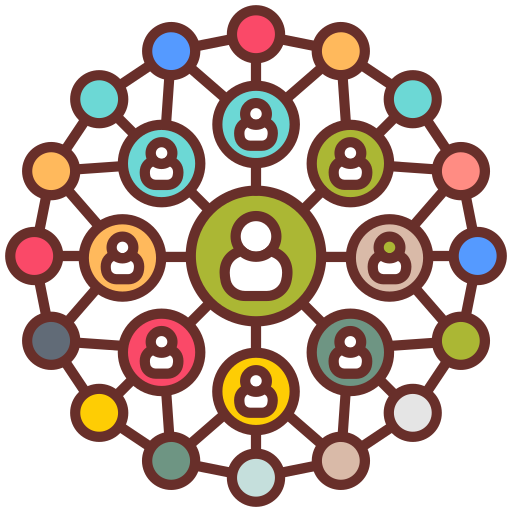
The analysis tools above assess each stakeholder’s relationship to the project. But stakeholders also have relationships with each other, and these lateral connections can be just as important as their individual power or interest scores. A stakeholder with moderate influence on the project may have strong influence over a stakeholder with very high influence. A group that appears resistant may be taking their cue from a single vocal individual who could be reached through a different channel.
Stakeholder relationship mapping visualizes these connections. Rather than a grid showing power and interest, it shows stakeholders as nodes and their relationships as links. Each link is annotated with the nature of the relationship: whether collaborative, adversarial, hierarchical, or informal. The result is a picture of the political landscape around the project.
This kind of analysis is particularly valuable when a project faces organized resistance or must build coalitions across groups that do not naturally collaborate. It is also useful when navigating a complex organizational environment with competing power bases. Understanding who influences whom helps us plan not just what to communicate but who the most effective messenger might be, and in what sequence to approach people.
Because stakeholder relationship maps contain candid assessments of organizational politics and individual relationships, they are treated as confidential working documents rather than formal project artifacts.

Stakeholder Register
Once we have identified and assessed stakeholders, these details get recorded in the Stakeholder Register.

Stakeholder registers typically contain the following information for each stakeholder or stakeholder group:
- Name
- Contact information
- Project role
- Project requirements
- Outcome expectations
- Impact and influence scores
- Likely attitude about the project
- Stakeholder classification
- Associations

Agile projects tend not to create detailed stakeholder registers in the same form. Instead, they may maintain a Who’s Who page on the project site, or create customer personas. Personas are descriptions of key stakeholders that keep their goals, requirements, concerns, and frustrations visible to the development team. While personas serve more as a requirements aid, they capture much of the same information.
Like many project management artifacts, the stakeholder register is a living document. New stakeholders may emerge as the project progresses, and the information held for existing stakeholders will need to be updated to reflect changes in their engagement and attitudes.
One important practical note: because the Stakeholder Register is a project document that may be shared broadly, it should be treated as a public record. Sensitive assessments, particularly the attitude classifications for resistant stakeholders, should reference people by number rather than by name. This protects individuals and avoids organizational friction if the document is seen by the wrong people. The more detailed and candid assessments of political positions and concerns belong in the Stakeholder Engagement Plan, which is kept confidential.
1.4.3 Analyze and tailor communication to stakeholder needs

Different stakeholders have different communication needs. A sponsor wants a concise executive summary. A technical lead wants enough detail to make sound decisions. A business representative wants to see progress against the outcomes that matter to them. A vendor needs clear scope and contract-relevant information. Sending everyone the same report satisfies almost nobody.

Types of Project Communication
Communication can be internal (with the project team) or external (outside of the team). It can be formal or informal, written or verbal. These types and some examples are shown below.

It helps to think about communications in three categories rather than two. Most people are familiar with push communications: reports, emails, and status updates sent out to stakeholders. Pull communications work the other way; stakeholders go to an intranet, knowledge repository, or document library to retrieve what they need. The third category is interactive communications, which covers two-way exchanges: conversations, workshops, whiteboarding sessions, and messaging. Interactive communication is the richest form because it allows for immediate clarification, emotional cues, and real-time alignment. It is also the most time-intensive, so reserve it for the stakeholders and topics where that depth of exchange matters most.
The scale of the stakeholder audience also shapes the approach. Key individual stakeholders are best served by interviews and one-on-one conversations, where active listening and emotional intelligence can be deployed fully. For the broader stakeholder group, regular project communications in consistent formats work well. For large or public groups, different approaches are needed, such as questionnaires and surveys, facilitated group sessions conducted online or in person, or digital media channels including email campaigns and project websites.
There are also practical constraints that affect communication choices. These include the urgency of the information, the reliability of technology available, language and formality requirements of the project environment, sensitivity or confidentiality of particular content, data protection regulations, and accessibility requirements for team members with specific needs. A communications plan that ignores these factors will encounter friction in execution.
A Communication Styles Assessment is a technique for identifying each stakeholder’s preferred communication method, format, and content. Some people process information best in writing and want detailed reports to read at their own pace. Others prefer verbal briefings where they can ask questions. Conducting even an informal assessment of communication style preferences for key stakeholders produces a more effective communications plan than one built on assumptions about what people want.

A Project Management Information System (PMIS) supports many of these activities by gathering, integrating, and distributing project data in a consistent, accessible format. Commercial project management platforms serve this function for many organizations, providing a single source of truth for schedule, cost, risk, and status information that stakeholders can access on demand.

Communications Management Plan
The Communications Management Plan is a critical document on traditional, predictive projects. It describes the format, frequency, and distribution channels that will be used for communications with each stakeholder or stakeholder group. Understanding what each stakeholder needs, in what form, at what frequency, and through which channel, is the foundation of that plan.

Stakeholder analysis from 1.4.2 directly informs this tailoring. The power/interest categorization tells us how much detail and how frequently we need to communicate. The individual preferences gathered from conversations with stakeholders tell us the format and channel.
Agile Communications
Agile communications take a different approach. Rather than a formal communications management plan, agile approaches bake transparency and information sharing into core practices:
- Demos: Having the team demonstrate increments of functionality at the end of every iteration shows stakeholders what the project has achieved. Frequent demos create a predictable cadence of show-and-tell sessions that keep stakeholders informed without requiring them to attend a scheduled status meeting.
- Kanban boards: Making work visible lets stakeholders see what tasks are being worked on, what is pending, and what is complete. The concept of “make work visible” removes many of the information asymmetries that create stakeholder anxiety.
- Information radiators: Big visible charts that share project information broadly. Task boards, impediment boards, and burndown charts share much of the same information as a project status report. The difference is that they are always current and available, without waiting for a reporting cycle.
- Daily stand-ups: Short team-level meetings where members share progress, plans, and any issues. Other stakeholders may occasionally drop in to observe.
- Retrospectives: Regular reviews at the end of each iteration focused on how things are working and what can be improved.

Hybrid Communications
Hybrid approaches are often necessary in practice. It is normal and often required to schedule additional review points within predictive projects. It may also be required to create communication plans for agile projects, especially those with distributed stakeholders. We should not assume that just because the information is available that it is being consumed or understood. So we need to keep asking: how do stakeholders want to receive information? Are they able to access and interpret what they are getting?
We can use retrospectives and surveys in any project to learn about communication needs and preferences.
1.4.4 Execute the stakeholder engagement plan

Identifying and analyzing stakeholders produces a picture and a plan. Executing that plan means actually following through: maintaining the interactions, communications, and involvement we committed to. A stakeholder engagement plan sitting in a drawer helps nobody.
The Stakeholder Engagement Plan
The Stakeholder Engagement Plan describes how we will work with each stakeholder or stakeholder group throughout the project. It is a different document from the Communications Management Plan. Where the communications plan focuses on what information will be shared, when, and through which channels, the Stakeholder Engagement Plan captures the broader engagement strategy. It records each stakeholder’s current attitude, the desired level of engagement, and how we plan to close the gap.
A Stakeholder Engagement Plan typically covers:
- The stakeholders or stakeholder groups identified and their classification
- The current engagement level for each key stakeholder
- The desired or target engagement level required for project success
- The strategies and actions planned to move stakeholders from current to desired engagement
- The timing and ownership of those engagement activities
Because it contains candid assessments of individuals’ attitudes and political positions within the organization, the Stakeholder Engagement Plan is usually treated as a confidential document, shared only with the project manager and senior project leadership rather than the broader team.
On agile projects, a formal plan of this kind is rarely produced. However, the thinking behind it is not absent. The product owner and team maintain a continuous, informal awareness of stakeholder engagement that serves the same purpose. This surfaces through iteration reviews, demos, and regular conversations rather than a written document.
A useful tool for tracking execution is the Stakeholder Engagement Assessment Matrix. This allows for a comparison between the current engagement levels and the desired engagement levels for successful project delivery.
The engagement level of stakeholders can be classified as:
- Unaware: Not aware of the project and its potential impacts
- Resistant: Aware of the project and potential impacts, but resistant to it. These stakeholders will be unsupportive of the work or goals of the project
- Neutral: Aware of the project, but neither in support nor opposed
- Supportive: Aware of the project and supportive of the work and its outcomes
- Leading: Aware of the project and actively engaged in making sure it is a success

Once we know where our main stakeholders stand, we can plan targeted strategies to move resistant or neutral stakeholders toward supportive or leading. Those who are already engaged need to be maintained.
Unaware stakeholders need information before anything else. Explain the project, its purpose, and its likely impacts on them, and do not assume that because a project has been announced it has been noticed or understood.
Resistant stakeholders deserve the most deliberate attention, because resistance usually has a legitimate root cause. It might be a past project that went badly, a concern about job security, a philosophical disagreement with the approach, or simply not having been involved in decisions that affected them. The most effective approach is to listen before advocating. Find out what is driving the resistance and, where possible, address those underlying concerns directly. Involving resistant stakeholders in decisions that affect them, rather than presenting them with a fait accompli, is one of the most reliable ways to shift their position over time.
Neutral stakeholders typically need a reason to care. Connect the project outcomes to something that matters to them personally or professionally. Showing them specifically how the project will make their work easier tends to be more effective than general communications about project goals.
Supportive stakeholders need to be maintained and not taken for granted. It is easy to focus energy on resistant and neutral stakeholders and neglect those already on side, but support can drift if people feel ignored or if their contributions go unacknowledged. Regular updates and genuine recognition of their involvement go a long way.
Leading stakeholders can be actively leveraged. Their visible engagement and advocacy carries weight with others, particularly those who are neutral or resistant. Identifying and nurturing these champions is one of the highest-leverage things a project manager can do.
Guidelines for executing stakeholder engagement include:

Build required involvement into project plans: If people are needed for activities, make sure they are included in project planning and know what is expected of them. If there is a risk that their failure to participate when required might impact the project, create a risk in the risk register to reflect this. However, do not wait for the risk to become an issue. Prime and confirm planned participation ahead of time. It is easy for part-time roles to forget what they agreed to, when they are required, and what the impact of a no-show would be.

Share progress, good and bad: It is crucial to be open and honest about progress, issues, and threats. People are astute and recognize when things are not being discussed. They will begin to withdraw their wholehearted commitment if they feel information is being withheld. Share information, both good and bad, with the team and business representatives. Often, people surprise us with novel solutions to problems when they understand the full picture.

Share forecasts to help planning: By sharing accurate updates on progress, we help people plan their work and improve their ability to prepare for the future. When sharing forecasts and plans, we also need to share our levels of uncertainty. Future predictions are more useful when we also communicate the confidence level attached to them, for example a +/- 10% range, or a hurricane-path style graph showing the expected outcome with a widening margin of uncertainty further into the future.

Monitor and adjust: Continually check in with people on how the work is going. As necessary, change how we are working with stakeholders to better suit the work being done and address identified issues.

The RACI matrix introduced in 1.3.7 is also a useful stakeholder engagement tool. The Accountable, Consulted, and Informed columns define exactly which stakeholders need decision authority, input, or visibility for each deliverable. Reviewing those columns with key stakeholders early helps surface engagement gaps before they become problems.
It is also worth recognizing that the nature of stakeholder engagement changes as a project moves through its lifecycle. During initiation and planning, engagement is focused on identifying needs, building shared understanding, and securing commitment. During execution, engagement shifts toward keeping stakeholders informed, managing emerging expectations, and maintaining support through the inevitable problems and surprises.
As the project moves toward closure, engagement pivots again. The focus shifts to confirming acceptance, managing the transition to operational ownership, and ensuring stakeholders are prepared for the changes the project delivers. Treating engagement as a single steady-state activity misses these natural shifts. The result is stakeholders who are either overwhelmed with involvement when they do not need it, or disengaged at the moments that matter most.
1.4.5 Optimize alignment among stakeholder needs, expectations, and project objectives

Even with good communication and a solid engagement plan, stakeholder needs and project objectives can drift apart. People come and go from projects, priorities change, and the market evolves. We must frequently remind people of where we are trying to get to and why that matters. Do not let the end goal shift or become fuzzy in people’s minds.
Promote dialog with all stakeholders: Encourage all participants to share their thoughts, ideas, and concerns. Make sure you know who all your customers are, and engage them early and often to keep the dialog going.
Engage business to understand needs deeply: There is often a difference between what people initially describe and what they really want. Once people see something working, they frequently realize they need something different. It is vital to explore what stakeholders really mean when they describe requirements, and to check back periodically to confirm their needs are still being met.

Predictive approaches invest heavily at the front of the project to gather and document stakeholder needs through structured workshops, interviews, and requirements sessions. The goal is to reach agreement on a complete and stable set of requirements before significant work begins. This works well when stakeholder needs are well understood and unlikely to change. The risk is that if needs are misunderstood early, the cost of correcting them compounds as the project progresses.
Agile approaches replace the upfront requirements effort with continuous engagement throughout the project. Rather than documenting all needs in advance, teams build incrementally and demonstrate working output at the end of each iteration. Stakeholders see real results, not documents describing intended results, and can respond with concrete feedback. Needs that were unclear or unstated at the start surface naturally through this process. Continuous engagement and validation reduce the likelihood of major rejections or extensive change requests later in the project lifecycle.
Foster group decision making
Make sure to engage the relevant people and that the process for making decisions taps individual knowledge before seeking group consensus. Getting ideas from individuals first avoids the halo effect (being drawn to a senior person’s opinion) and groupthink (where people do not push back when in a group). Then, as a group, decide on the best options presented.
Management by Objectives (MBO) is another structured approach for keeping stakeholder efforts aligned with project goals. Rather than coordinating through tasks and instructions, MBO uses clear, measurable objectives agreed upon collaboratively with team members and key stakeholders. These are set at the start of a project or phase, or at the beginning of each iteration. When people know specifically what success looks like and had a hand in defining it, they can make aligned decisions and measure their own progress without constant direction.
Aligning expectations once is not enough. Alignment is an ongoing activity throughout the project. Task 1.5 covers, in more detail, the specific tools and approaches for aligning stakeholder expectations.
1.4.6 Build trust and influence stakeholders to accomplish project objectives

All of the analysis, planning, and execution in the previous enablers ultimately serves one outcome. That is building the trust and influence needed to move a project forward through people we do not directly control. Project managers rely on their ability to influence far more than their ability to direct.
Building trust is essential for leading any endeavor, and being honest and consistent are the foundation of that trust. The foundation of trust rests on four values that guide behavior, particularly when projects face pressure and difficult decisions. Integrity means acting in accordance with principles even when it is inconvenient. Honesty means being truthful in communications, including about problems and uncertainties. Fairness means treating stakeholders equitably and making decisions that prioritize the common good over personal advantage. Respect means valuing people’s time, concerns, and contributions genuinely rather than performatively. Stakeholders are good at detecting the difference, and trust built on these values is far more durable than trust built on smooth communication alone. We need to follow through on what we commit to, do what we say we will do, and communicate continuously.
Communication plans are a core component of consistency and follow-through. A communication plan sets out how we will share project information with various stakeholders: what to share, with whom, when, and through which channels. The main thing is that people know where to find it, and that it explains how project information will be shared. Hybrid and agile approaches adopt high-transparency tools for communicating project status. Instead of sending status reports and hoping they are read, information is publicly displayed in team spaces and on project websites through information radiators.
There are pros and cons to both sending reports and relying on information radiators. Stakeholder analysis (asking what people want and need, whether conducted formally or informally) should inform our decisions about which approach to use for which audiences.

Share the goal and keep it visible
People must understand and share the same vision of “done” for the final solution and, ideally, for incremental steps along the way. When faced with their own local decision points, or forks in the trail towards project completion, they make better decisions when they know which direction the project is heading. A common vision creates aligned effort without the need for constant, centralized coordination. (See 1.1 Develop a Common Vision for more on establishing and maintaining a shared project vision.)

Be honest about progress
Being open about progress, both good and bad, is not only professional and expected; it builds trust, which pays future dividends in many ways. People want to know what is going on. If they sense that problems are being hidden, they become cautious, reduce their commitment, and start protecting themselves. Regular, transparent reporting is one of the most powerful trust-building tools a project manager has.
Use the PMIS
Project Management Information Systems (PMIS) and reporting tools support the monitoring of satisfaction and expectations at scale. A PMIS gathers and integrates project data from multiple sources and makes it available to stakeholders in a consistent format. The information basis for assessing project health is then shared rather than owned by the project manager alone. Automated reporting tools streamline the collection and presentation of key performance indicators, while visualization software converts data into formats that non-technical stakeholders can read and respond to quickly. Used well, these tools reduce the effort of routine reporting. They free up the project manager’s attention for the interpretive work of understanding what the data means and what response it requires.

Build Influence
Influence builds over time and through consistent behavior. Following through on commitments, being transparent, and showing genuine interest in stakeholders’ concerns builds a reservoir of goodwill. That goodwill can be drawn on when the project needs support or requires stakeholders to do something difficult.
Building influence also requires political awareness: an understanding of the organizational landscape, the informal power structures, and the alliances that shape how decisions actually get made. Political awareness is not about manipulation. It is about understanding whose support is needed to move something forward and whose concerns need to be addressed to remove an obstacle. It also means knowing who the most credible messenger is for a particular communication to a particular audience. Developing this awareness is a legitimate and important project management skill. It separates project managers who can navigate complex organizational environments from those who can only operate in straightforward ones.
Deliverables and Tools
- Stakeholder Register
- Stakeholder Engagement Plan
- Stakeholder Engagement Assessment Matrix
- Communications Management Plan
- Power/Interest Grid
- Salience Model
- Stakeholder Cube
- Stakeholder Relationship Map
- Communication Styles Assessment
- PMIS (Project Management Information System)
- RACI Matrix (cross-reference 1.3.7)
- Customer personas
Related Topics
FAQ
What is the stakeholder engagement assessment matrix?
A tool that compares each stakeholder’s current engagement level with their desired level to support successful project delivery.
What are the five engagement levels in the matrix?
Unaware, resistant, neutral, supportive, and leading.
Why use a stakeholder engagement assessment matrix?
It shows the gap between current and desired engagement, so the team can plan actions to move stakeholders toward the support the project needs.
How does this task fit into the 2026 PMP exam?
Task 1.4 sits in the People domain of the 2026 Exam Content Outline. The 2026 PMP Exam page has the domain and task breakdown and what changed in the new exam.
Mastery Map and Quiz


Quiz Summary
0 of 5 Questions completed
Questions:
Information
You have already completed the quiz before. Hence you can not start it again.
Quiz is loading…
You must sign in or sign up to start the quiz.
You must first complete the following:
Results
Results
0 of 5 Questions answered correctly
Your time:
Time has elapsed
You have reached 0 of 0 point(s), (0)
Earned Point(s): 0 of 0, (0)
0 Essay(s) Pending (Possible Point(s): 0)
Categories
- Not categorized 0%
- 2.4 Engage Stakeholders 0%
- N1.4 0%
-
-
 Congratulations! You earned the badge.
(Must be logged in to be awarded badges)
See your achievements
| Pos. | Name | Entered on | Points | Result |
|---|---|---|---|---|
| Table is loading | ||||
| No data available | ||||
- Review
- Answered
- Correct
- Incorrect
